
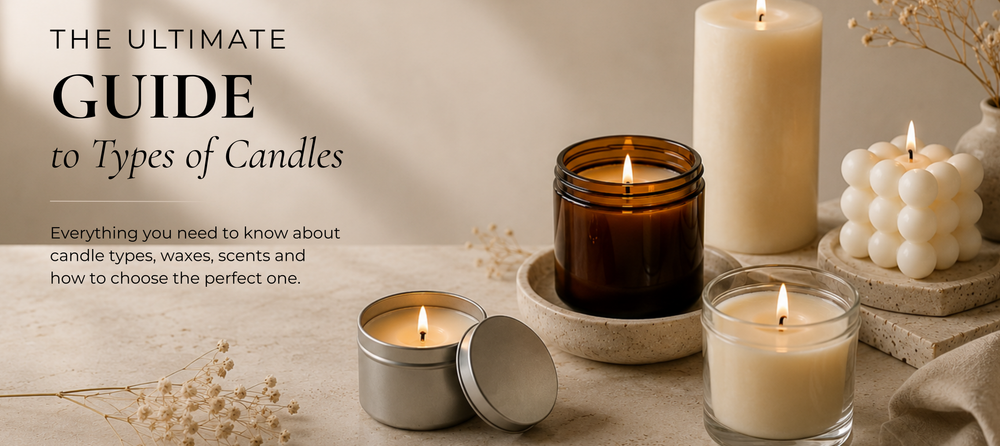
From container candles and tea lights to decorative moulded designs, discover the different types of candles, how they’re made, and which formats are best suited to different candle-making projects.
Introduction
If you’re new to candle making, one of the first things you’ll discover is that not all candles are created equal.
A container candle, a pillar candle, and a decorative bubble candle may all look similar at first glance, but from a manufacturing perspective they’re completely different products. Each requires specific waxes, wick selections, fragrance considerations, and testing procedures to perform properly.
At Craft HQ, we work with candle makers at every stage of their journey, from hobbyists creating their first candle at home to established brands developing large-scale fragrance collections. One thing we’ve learned is that choosing the right candle format from the beginning can save significant time, money, and frustration later on.
According to the National Candle Association, consumers primarily purchase candles to create ambience, relaxation, and a sense of comfort within the home. As demand for home fragrance products continues to grow, understanding the technical differences between candle formats has become increasingly important for both hobbyists and commercial manufacturers.
In this guide, we’ll explore the most popular types of candles, explain their advantages and challenges, and share practical insights from the candle-making industry to help you make informed decisions.
Why Understanding Different Types of Candles Matters

Many new makers focus immediately on fragrance selection or packaging design, but the candle format itself is often the decision that influences everything else.
The type of candle you choose will affect:
- Which waxes you can use
- Wick selection
- Fragrance performance
- Manufacturing complexity
- Packaging requirements
- Production costs
For example, a fragrance that performs beautifully in a large container candle may behave very differently in a tea light or pillar candle. Likewise, a wax designed for jars may not be suitable for freestanding candles.
Understanding these differences early in the product development process can prevent costly mistakes and significantly improve the final result.
Container Candles: The Best Place for Most Makers to Start

What Are Container Candles?
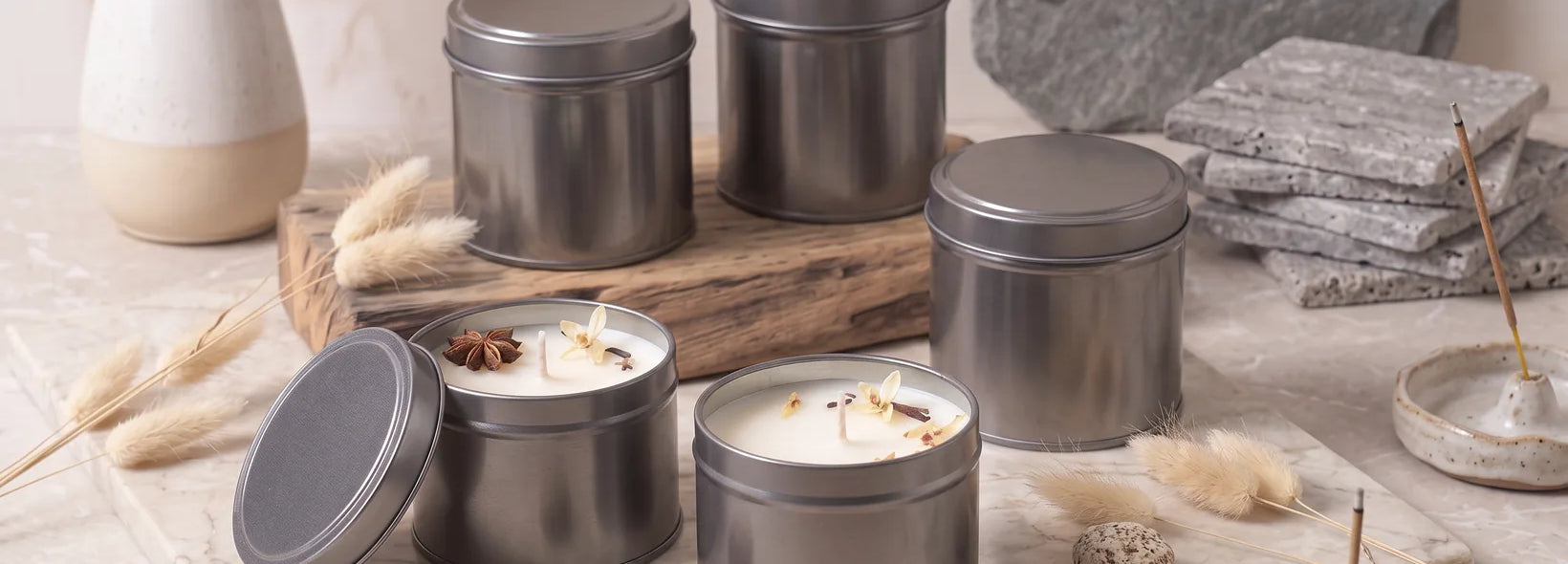
Container candles are poured directly into a vessel such as glass jars, ceramic pots, metal tins, or concrete containers.
They are by far the most popular candle format in today’s home fragrance market and are often the first product launched by new candle brands.
Container candles are particularly versatile because they work well with a wide range of fragrance oils, waxes, and vessel styles. This flexibility allows candle makers to experiment with different formulations and aesthetics while maintaining relatively simple manufacturing processes.
Why Are Container Candles So Popular?
Container candles offer several advantages:
- Excellent fragrance throw
- Safer burning characteristics
- Simplified manufacturing process
- Wide range of packaging options
- Compatibility with most candle waxes
For many brands, container candles provide the ideal balance between aesthetics, performance, and ease of production.
Expert Insight from Craft HQ
One of the most common mistakes we see is makers overcomplicating their first product launch.
Many beginners are tempted to start with complex decorative candles or unusual moulds. In reality, container candles allow you to focus on mastering the fundamentals of candle making, including fragrance load, wick selection, cure times, and burn testing.
For this reason, container candles are often the format we recommend to new brands entering the market.
Pillar Candles: Beautiful but More Technically Demanding
What Are Pillar Candles?
Pillar candles are freestanding candles that do not require a container.
Unlike container candles, they must maintain their structure throughout the entire burn cycle.
Advantages of Pillar Candles
- Elegant appearance
- Long burn times
- Strong decorative appeal
- Reduced packaging requirements
Manufacturing Challenges
Although pillar candles may appear simple, they can be surprisingly difficult to manufacture correctly.
They require harder wax formulations capable of supporting their own weight and maintaining shape during burning.
Expert Insight from Craft HQ
A common issue we encounter is makers attempting to use container waxes for pillar candles.
Container waxes are generally formulated to remain soft and adhere to vessels. When used in freestanding applications, they can cause deformation, poor burn performance, and structural instability.
Selecting the correct wax for the intended candle format is one of the most important decisions in product development.
Votive Candles: Small Candles with Big Potential

What Are Votive Candles?
Votive candles are small candles designed to be burned inside a suitable holder or poured directly into a votive jar.
While modest in size, they can provide excellent fragrance performance and surprisingly long burn times.
Why Are Votives Popular?
Many brands use votives as:
- Fragrance sampling products
- Event favours
- Gift set additions
- Entry-level purchases
For many candle makers, votives also provide a cost-effective way to evaluate how a fragrance performs before committing to larger production runs. However, results should always be validated within the final candle format before launch.
Expert Insight from Craft HQ
Votives can be an excellent way to introduce customers to a fragrance collection.
However, manufacturers should remember that fragrance performance in a votive does not always reflect performance in a larger candle format. Testing should always be conducted in the final product size before launch.
Tea Light Candles: Simple, Practical and Consistently Popular
What Are Tea Lights?
Tea lights are small candles housed within thin metal or polycarbonate cups.
They remain one of the most widely produced candle formats worldwide. Tea lights are often used during product development to assess fragrance performance in smaller wax volumes. Because of their compact size, fragrance selection and wick performance become particularly important considerations.
Common Applications
Tea lights are frequently used in:
- Wax warmers
- Hospitality environments
- Restaurants
- Weddings
- Spa settings
Expert Insight from Craft HQ
Because tea lights contain relatively small quantities of wax, fragrance performance can vary significantly depending on the chosen fragrance oil.
When developing scented tea lights, fragrance selection becomes particularly important and should always be supported by thorough testing.
Decorative Candles: Social Media’s Favourite Candle Trend
Why Decorative Candles Have Become So Popular
The rise of Instagram, Pinterest, and TikTok has transformed decorative candles into one of the fastest-growing segments of the market. This trend reflects wider growth across both the home fragrance and home décor sectors, where consumers increasingly seek products that combine functionality with visual appeal. Market research continues to show strong demand for premium and aesthetically driven home fragrance products.
Popular examples include:
- Bubble candles
- Sculptural candles
- Floral moulded candles
- Abstract designs
- Architectural candles
The Challenge Behind Decorative Candles
Many decorative candles are far more difficult to formulate than they initially appear.
Complex shapes often create:
- Uneven burn patterns
- Excessive dripping
- Wax pooling issues
- Safety concerns
Expert Insight from Craft HQ
Decorative candles are often marketed as home décor products rather than everyday candles.
Before launching any decorative candle collection, it’s important to conduct extensive burn testing to ensure both safety and performance.
Scented Candles: Where Fragrance Meets Performance
What Makes a Scented Candle Different?
Scented candles are designed to deliver fragrance both before and during use.
Manufacturers typically evaluate:
- Cold throw (unlit fragrance)
- Hot throw (fragrance while burning)
A successful candle should perform well in both areas. Achieving strong fragrance performance requires careful balancing of fragrance load, wax selection, wick size, and curing conditions.
Even small changes in formulation can significantly affect both cold throw and hot throw performance.
The Biggest Myth in Candle Making
Many new makers believe that increasing fragrance load automatically creates a stronger candle.
In reality, fragrance performance depends on multiple factors, including:
- Wax selection
- Wick choice
- Vessel dimensions
- Fragrance compatibility
- Cure time
Expert Insight from Craft HQ
Not all fragrance oils behave the same way in every candle format.
A fragrance that performs exceptionally well in a large container candle may produce different results in a tea light or pillar candle.
This is why we always recommend testing fragrance oils within the final product format rather than assuming performance will remain consistent across multiple applications. For example you may find a lighter citrus fragrance requires a smaller wick size than a spicy or woody fragrance. This can also apply to a candle made in a tin vs glass due to the heat distribution.
Choosing the Right Wax for Different Candle Types

One of the most important aspects of candle development is matching the wax to the intended candle format. Not every wax is suitable for every application. Understanding the strengths and limitations of different waxes can help reduce testing time and improve overall product performance.
Soy Wax
Popular for:
- Container candles
- Home fragrance brands
- Natural positioning
Paraffin Wax
Popular for:
- Strong scent throw
- Pillar candles
- Commercial production
Coconut Wax
Popular for:
- Luxury candles
- Premium positioning
- Smooth finishes
Beeswax
Popular for:
- Natural collections
- Decorative candles
- Long burn times
Expert Insight from Craft HQ
Many professional manufacturers use wax blends rather than relying on a single wax type. Blending allows candle makers to optimise fragrance throw, appearance, burn quality, and production efficiency while overcoming the limitations of individual waxes.
5 Common Mistakes New Candle Makers Make
After working with thousands of candle makers, we’ve noticed the same mistakes appearing again and again.
1. Choosing a Wick Before Selecting a Fragrance
Fragrance oils can significantly influence burn behaviour.
2. Assuming More Fragrance Means Better Performance
Overloading a candle with fragrance can sometimes reduce performance rather than improve it.
3. Skipping Burn Testing
Testing is essential before launching any product commercially.
4. Using the Wrong Wax for the Candle Type
Not every wax is suitable for every application.
5. Changing Multiple Variables at Once
When testing, only adjust one variable at a time to identify the true cause of performance changes.
Final Thoughts
Understanding the different types of candles is about far more than recognising shapes and styles.
For candle makers, each format presents its own technical considerations, challenges, and opportunities. The right combination of wax, fragrance oil, wick, and vessel can make the difference between an average candle and an exceptional one.
Whether you’re developing your first product or expanding an established collection, investing time in understanding candle formats will help you make better decisions and create products that customers genuinely love.
Frequently Asked Questions About Types of Candles (FAQ)
What type of candle is best for beginners?
Container candles especially tins are generally considered the easiest candle format for beginners because they simplify many aspects of production, testing, and troubleshooting.
What type of candle burns the longest?
Beeswax candles and pillar candles are often among the longest-burning candle types due to their density and slow-burning characteristics.
Are soy candles better than paraffin candles?
Both waxes offer unique advantages. Soy wax is often chosen for its renewable origin, while paraffin remains popular because of its strong fragrance throw and consistent performance.
Why does the same fragrance perform differently in different candle types?
Fragrance performance can vary depending on wax type, wick selection, candle dimensions, and burn conditions. This is why manufacturers should always test fragrances within their final product format.
What is the most popular type of candle today?
Container candles remain the most popular candle format due to their versatility, safety, and excellent fragrance performance.
Sources
• British Candlemakers Federation
Comments