
How to Make Your First Homemade Scented Candle
Do you dream of a warm atmosphere, a delicate fragrance filling your home and, above all, a creative moment just for you? Making your own scented candles at home is not only simple and accessible, but also a genuinely satisfying sensory experience.
In this guide, you’ll learn how to create personalised, high-quality candles at home, whether you’re a complete beginner or already enjoy DIY projects.
Why make your own scented candles?
Making candles at home comes with plenty of benefits:
Greater ingredient awareness
When you make your own candles, you choose the wax type, fragrance oils and additives yourself. This gives you full visibility over what goes into your candle and allows you to tailor materials to suit your preferences and the type of candle you want to create.
Cost-effective creativity
Shop-bought scented candles can be expensive. Candle making allows you to produce multiple candles at a lower cost per unit, especially once you have your basic equipment.
Fully personalised results
From container and colour to fragrance strength and wick choice, every element can be customised to suit your taste, décor and space.
A relaxing creative hobby
Candle making is a calming, hands-on activity that many people find enjoyable and rewarding — a great way to unwind while creating something practical and beautiful.
What you need to make scented candles at home
Before you start, gather everything you need for a smooth, enjoyable first pour. You can explore our full range of candle making supplies to find waxes, containers and fragrance oils suitable for your project.
Ingredients for candles
Candle wax
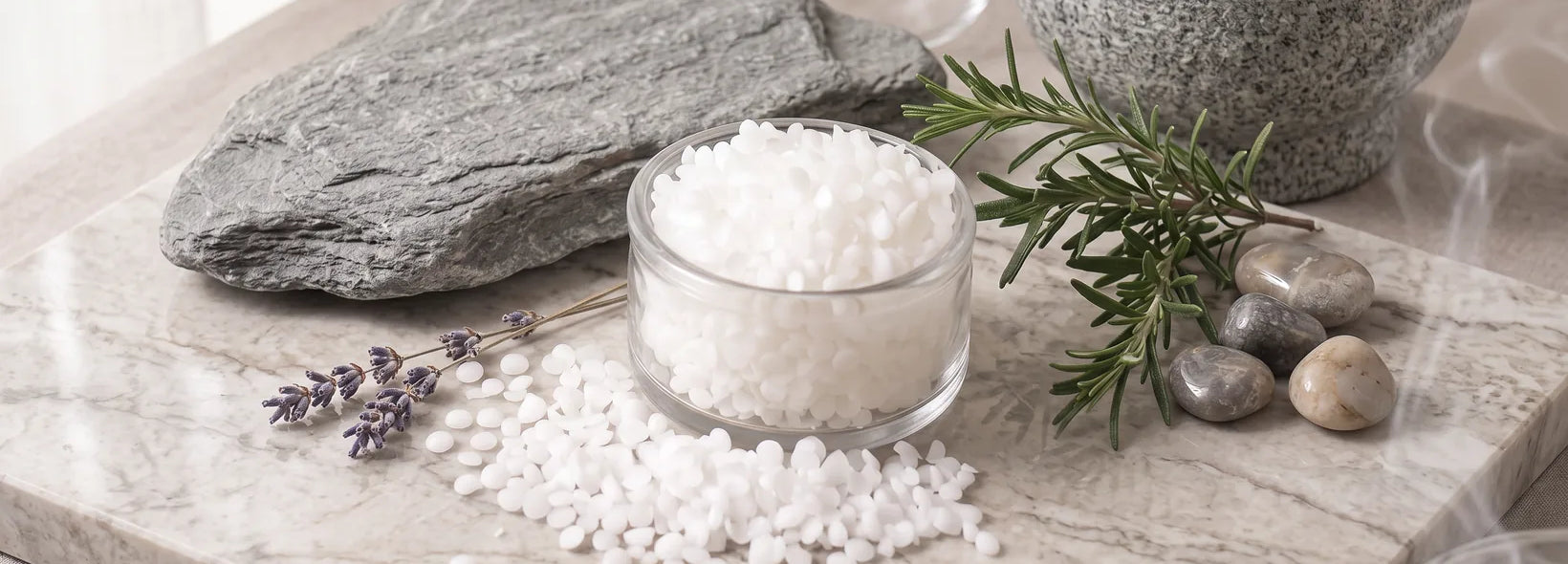
Choose a wax suited to your candle style, whether you are making container candles, moulded candles or wax melts. Different waxes offer different performance characteristics in terms of burn behaviour, finish and fragrance throw, so selecting the right candle wax is key to achieving your desired result.
If you are unsure where to start, you may also find our guide on how to choose the best candle wax useful.
Candle fragrance oil
Always use fragrance oils specifically formulated for candle making and suitable for your chosen wax. These are designed to remain stable when heated and to diffuse properly while the candle burns.
Wick & Sustainer
Cotton or wooden wicks are commonly used. The most important factor is choosing the correct wick size for your container diameter and wax type. Don’t forget, you will need a sustainer to hold the wick in place.
Colour
Colour is optional, but liquid dyes, wax flakes or granular candle dyes make it easy to customise the finished look of your candle.
Tools & Accessories
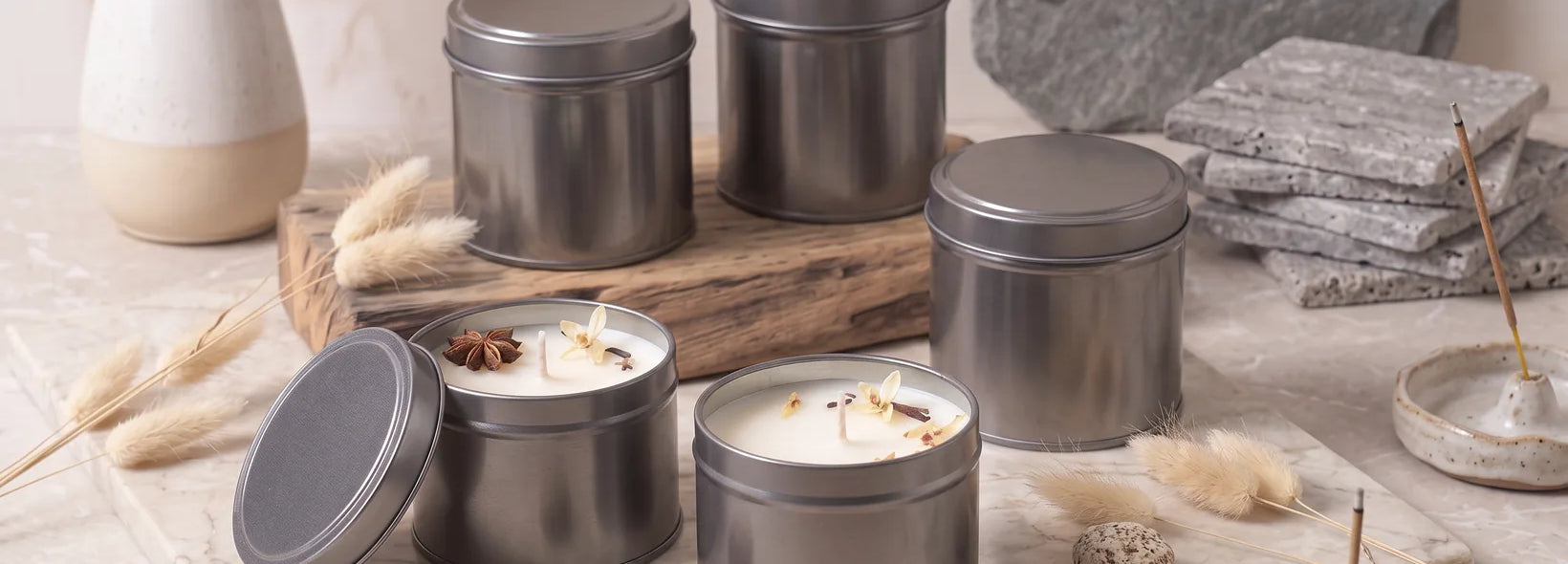
- A heat-resistant container, such as a glass jar, ceramic vessel or metal tin
- A thermometer
- A double boiler, or a heat-safe jug placed in a pan of water
- A digital scale for accurate measurements
- A wick centring tool, or simple supports like chopsticks
- Wick trimmers or scissors
For a wider overview of what you may need, read our guide to essential materials for making your own candles.
Step-by-Step: How to Make Your First Candle
1. Prepare the container
Clean and fully dry your container. Fix the wick into the sustainer, if not already purchased assembled, and secure it to the bottom of the container using a wick sticker or a small amount of heat-resistant adhesive.
Centre the wick using a wick centring tool or supports laid across the top of the container.
2. Melt the wax
Melt the wax gently using a double boiler, never directly over a flame. Use a thermometer and follow the recommended melting and pouring temperatures for your chosen wax.
3. Add fragrance
Once the wax is fully melted and at the correct temperature, add your fragrance oil. Stir gently but thoroughly to ensure even distribution while avoiding air bubbles.
It’s important not to overheat fragrance oils, as excessive heat can cause evaporation. Ideally, fragrance should not be exposed to temperatures above 70°C.
Always respect the maximum usage level for the fragrance oil, often guided by IFRA limits, and stay within the recommended percentage for your chosen wax.
4. Pour the wax
Pour the wax slowly into your container, keeping the wick straight and centred. Leave the candle to cool naturally at room temperature, away from draughts.
Depending on the wax type and container size, some candles may require more than one pour. Certain waxes contract as they cool, which can result in slight sinkholes around the wick.
As the wax begins to set, it may pull the wick slightly off-centre. You may need to straighten it more than once. Do this gently, taking care not to pull it out of the wick sustainer.
5. Trim the wick
Once fully set, trim the wick to around 5–7 mm. While the candle can be used at this point, for best results allow it to cure for at least 48 hours at room temperature before burning.
Cooling candles too quickly can cause the wax to pull away from the container sides or create surface imperfections.
Tips for better results
-
Test before making large batches
Fragrance performance can vary depending on the wax, wick and container. -
Match the wick to the container
A wick that’s too small can cause tunnelling, while one that’s too large may lead to soot or overheating. -
Avoid draughts while cooling
This helps prevent uneven surfaces and cosmetic flaws. -
Allow time to cure
Letting the candle rest before burning improves scent throw and overall stability.
How to calculate wax and fragrance amounts
Getting your proportions right makes a big difference to burn quality and fragrance performance.
1. Measure your container volume
Fill your container with water to the level you want your candle. Pour the water into a measuring jug to find the volume in millilitres.
Quick guide:
1 ml of water ≈ 1 g of wax, which is close enough for most home candle calculations.
2. Calculate wax weight
Wax (g) = Container volume (ml) × 1
Example:
A 100 ml container = approx. 100 g of wax
3. Calculate fragrance weight
Fragrance is typically used at 5–10%, depending on the wax and desired scent strength. Always stay within the fragrance’s maximum permitted level.
Fragrance (g) = Wax (g) × (Fragrance % ÷ 100)
Example:
100 g wax at 8% fragrance = 8 g fragrance